Global ESG and Climate-Disclosure Regulation: A Converging but Uneven Landscape

The global sustainability regulatory landscape is entering a new phase of consolidation, divergence, and transition. Across Europe, the UK, the Americas, and Asia Pacific, governments and regulators are tightening expectations around climate risk, due diligence, stewardship, and sustainable finance. Yet, each region is doing so at a different pace and with varying degrees of prescriptiveness. The result is a complex compliance environment in which multinational companies must navigate both increasing standardisation and persistent regulatory fragmentation.

Europe and the UK: From Ambition to Calibration

Europe remains the most advanced and comprehensive jurisdiction for sustainability regulation, spanning corporate disclosure, due diligence, banking supervision, fund labelling, and sustainable finance instruments. The European Commission’s suite of regulations, including the CSRD, CSDDD, EU Taxonomy, SFDR, and the EU Green Bond Standard, has set a global benchmark for investor-grade sustainability reporting and climate-aligned financial markets.

However, Europe is now entering a phase of regulatory recalibration. Through its Omnibus Proposal, the Commission is responding to industry concerns over complexity, cost, and readiness. CSRD and CSDDD scopes may contract by up to 80 percent, assurance timelines are expected to be relaxed, and due diligence obligations may be narrowed to direct suppliers. Similarly, the EU Taxonomy may adopt materiality thresholds and fewer DNSH requirements, signalling a shift from over-prescriptive rules toward more pragmatic implementation.

Financial market rules continue to strengthen through enhanced Pillar 3 ESG disclosures, MiFID II sustainability preferences, fund naming guidelines, and the Low Carbon Benchmark Regulation. All aim to reduce greenwashing and align investment flows with climate objectives. The EU Green Bond Standard, effective from late 2024, will test issuer capability to meet high taxonomy thresholds and strict assurance requirements.

The United Kingdom, outside the EU framework, is converging toward global standards through its Sustainability Disclosure Requirements, climate risk governance expectations, and forthcoming ISSB-aligned UK Sustainability Reporting Standards. With anti-greenwashing rules, fund labels, TCFD-aligned disclosures, and strengthened stewardship codes, the UK is positioning itself as a global centre for credible sustainable finance while maintaining regulatory independence.

Americas: Patchwork Progress and State-Level Leadership

Regulation in the United States remains fragmented. The SEC’s ESG fund disclosure rules have advanced transparency for investment products, yet the broader SEC climate disclosure rule is stalled amid political and legal contention. In this vacuum, California has emerged as a powerful subnational regulator. Its SB 253 and SB 261 laws impose some of the world’s most stringent mandates on Scope 1, 2, and 3 emissions reporting and climate risk disclosure for companies with more than USD 1 billion in revenue, creating de facto national obligations for many large firms.

Prudential regulators, including the Federal Reserve, OCC, and FDIC, are gradually embedding climate risk management into supervisory expectations for banks, signalling slow but steady institutionalisation of ESG risk within the financial system.

Canada is moving toward full alignment with ISSB (CSDS 2) standards, with forthcoming mandatory climate disclosures for public companies, enhanced stock exchange guidance, and climate risk governance expectations under OSFI’s Guideline B 15. In Latin America, momentum is accelerating. Brazil, Mexico, and several other markets are transitioning from voluntary expectations to mandatory ISSB aligned reporting by 2026, supported by phased assurance requirements and growing investor demand.

Asia Pacific: Rapid Alignment with ISSB and Transition to Mandatory Regimes

The Asia Pacific region is shifting from fragmented voluntary practices toward a coordinated move to ISSB-aligned mandatory disclosure.

Hong Kong and Japan are among the earliest markets to require ISSB-based climate reporting, building on strong TCFD foundations. Japan is concurrently advancing climate governance through revisions to the Corporate Governance Code and enhanced stewardship expectations.

Australia’s 2024 climate reporting law marks one of the fastest transitions to mandatory ISSB-aligned disclosure, with Scope 1 and 2 reporting required from 2025 and Scope 3 from 2026.

In Southeast Asia, regulators are accelerating reforms:

  • Malaysia is transitioning all Main Market issuers to ISSB-aligned sustainability statements by 2025 to 2026, with assurance requirements added over time.
  • Singapore will begin its phased ISSB regime from FY2025, with Scope 1 and 2 mandatory for listed issuers and assurance expected from the middle of the decade.
  • Indonesia, Thailand, and the Philippines are strengthening their frameworks, guided increasingly by global baselines and emerging regional taxonomies.

India and China represent two of the largest markets undergoing structural regulatory evolution. India’s mandatory BRSR reporting for the top 1,000 listed companies is expanding, and new rules for ESG rating providers signal rising regulatory scrutiny. China’s new Sustainability Disclosure Standards (Trial) and its 2024 application guides mark the beginning of a phased transition toward mandatory ESG reporting across major exchanges by 2027 to 2030, including features such as double materiality and value chain disclosures.

South Korea is expected to fully align with global standards by 2030, with climate risk integration expanding across its prudential supervisory regime.

Middle East and Africa: Sovereign Wealth Funds Driving Market Discipline

In the Middle East, regulatory momentum is increasing, driven heavily by sovereign wealth funds such as PIF, ADIA, Mubadala, and QIA, which increasingly require strong ESG credentials from their investees. Stock exchanges in Saudi Arabia, the UAE, and Qatar encourage sustainability disclosure, and more formalised ESG requirements are expected as these markets expand sustainable finance instruments.

In South Africa, the JSE, King IV Code, and the Prudential Authority’s Climate Roadmap together embed ESG governance, integrated reporting, and climate risk management into corporate expectations. Anticipated future alignment with ISSB standards will further strengthen comparability and investor confidence.

Conclusion: Toward a Fragmented but Converging Global Baseline

Across all regions, the direction of travel is unmistakable: clearer standards, broader disclosure mandates, stronger assurance, and deeper integration of climate risk into financial supervision. The ISSB standards (IFRS S1 and S2) are rapidly becoming the de facto global baseline, even as Europe pursues a broader double materiality model and the United States remains politically divided.

The next two to three years will define the global regulatory equilibrium. Companies operating internationally must prepare for:

  • Convergence around ISSB for climate-related disclosures
  • Increasing due diligence expectations, although calibrated in Europe
  • Stronger anti-greenwashing regimes across capital markets
  • Expanding assurance obligations
  • More prescriptive stewardship and governance requirements
  • Sovereign wealth funds and stock exchanges serving as new enforcement centres

The global ESG regulatory landscape is no longer emerging. It is crystallising. Firms that invest early in data architecture, credible transition planning, and integrated reporting will be best positioned to meet rising expectations, secure capital, and maintain legitimacy across jurisdictions.


How does your corporate “frame” the narrative around “climate change”? How do you evaluate the impact on business levers you associate with daily?

In the face of growing climate concerns, major energy companies are being asked not only what they say about climate change but also how their narratives shape what they do. The way a company frames climate change, whether as a social responsibility, a business risk, or an opportunity for growth, is more than semantics; it drives how the company operates, the strategic bets it places, and how it measures success.

Is climate change primarily perceived as (a) a “responsibility” the company must take on to uphold its ‘contract’ with society, (b) a “risk” that threatens profitability, or (c) an “opportunity’ for further growth?1

A  study1 conducted a few years ago examined how three major energy companies, Total Energies (France), Suncor Energy (Canada), and Statoil (Norway, now Equinor), frame climate change in their corporate climate strategy disclosures and how these framings influence their operations, strategy, and performance. These companies were among the first in the sector to publish standalone climate strategy reports, signaling a growing trend in corporate climate communication.

The study found that each company adopts a distinct perspective on climate change. TotalEnergies presents it primarily as a matter of social responsibility, positioning itself as “the responsible energy major” and emphasizing its commitment to providing clean, affordable energy in alignment with global climate goals. In contrast, Suncor Energy approaches climate change as a business risk, with a particular focus on transition risks such as carbon pricing and regulatory uncertainty, which informs its more conservative and risk-managed operational and strategic decisions. Equinor, frames climate change as a business opportunity. Its strategy is centered on innovation, investment in renewables, and a deliberate shift toward becoming a broad energy company, viewing the energy transition as a chance to create competitive advantage.

These distinct framings go beyond rhetoric, shaping the companies’ investment priorities, operational choices, and the metrics by which they measure success. They also reflect differing approaches to corporate legitimacy, whether through social accountability, risk management, or strategic transformation in a decarbonizing world.

Table: Examples of Impact on Business Levers

FramingOperationsStrategyPerformance Metrics
ResponsibilityEmissions control, transparency, stakeholder dialogueLegitimacy, social license, ESG integrationESG ratings, stakeholder trust, impact disclosures
RiskCarbon compliance, facility resilienceRisk-adjusted returns, hedging against regulationRisk exposure, stranded asset avoidance, carbon cost
OpportunityNew energy ventures, innovationGrowth through clean tech, energy diversification% green revenue, innovation ROI, renewable investments

While all three companies reference elements of responsibility, risk, and opportunity to varying degrees, their dominant framing reveals much about how they are positioning themselves in the energy transition. As climate strategy disclosure becomes more mainstream and closely scrutinized by investors, regulators, and civil society, the coherence between a company’s framing and its actual business transformation will increasingly determine its credibility and success.

  1. Dahl, T. and Fløttum, K. (2019) ‘Climate change as a corporate strategy issue: A discourse analysis of three climate reports from the energy sector’, Corporate Communications: An International Journal, 24(3), pp. 499–514. Available at: https://doi.org/10.1108/CCIJ-08-2018-0088.

The Varied Faces of ESG: Compliance, Opportunity, and Everything In Between

In modern business, few acronyms have garnered as much attention and diverse interpretations as ESG – Environmental, Social, and Governance. Depending on who you ask, ESG can represent compliance, opportunity, an existential threat, or even a business cost. And for some, ignorance might indeed seem blissful. Let’s explore the multifaceted nature of ESG and what it means for different stakeholders.

ESG as a compliance requirement

For many businesses, especially those operating in highly regulated industries or listed in progressive stock exchanges, ESG is synonymous with compliance. Government regulations, stock exchange requirements, international standards, and industry guidelines often mandate certain environmental, social, and governance practices. Compliance with these requirements is not optional; it’s a legal obligation that businesses must adhere to, often under the scrutiny of regulatory bodies and watchdog organizations.

While compliance may seem like a burden, it also allows businesses to demonstrate their commitment to responsible and ethical practices. By meeting or exceeding regulatory requirements, companies can enhance their reputation, build trust with stakeholders, and mitigate the risk of legal and financial penalties.

ESG as an opportunity

Contrary to viewing ESG as a mere compliance exercise, many forward-thinking businesses see it as an opportunity for innovation and growth. Embracing ESG principles can unlock new markets, attract socially conscious investors, and drive operational efficiencies. From developing sustainable products and services to implementing inclusive hiring practices, businesses prioritizing ESG stand to gain a competitive advantage in today’s socially and environmentally conscious marketplace.

Moreover, integrating ESG into business strategy can lead to cost savings, risk mitigation, and enhanced long-term value creation. By proactively addressing environmental and social challenges, companies can future-proof their operations and position themselves as sustainability and responsible governance leaders.

ESG as an existential threat

However, for some businesses, particularly those heavily reliant on fossil fuels or operating in environmentally sensitive industries, ESG poses an existential threat. The transition to a low-carbon economy, increased scrutiny of environmental impacts, and growing consumer demand for sustainable alternatives can pose significant challenges for traditional business models.

For these companies, ignoring or downplaying the importance of ESG is not an option. Failure to adapt to changing market dynamics and stakeholder expectations could result in reputational damage, financial losses, and even business failure. The existential threat posed by ESG underscores the urgent need for strategic transformation and innovation across industries.

ESG as financial burden or strategic investment?

From an operational standpoint, implementing ESG initiatives can indeed entail upfront costs. Whether investing in renewable energy infrastructure, conducting sustainability audits, or hiring specialized personnel, tangible expenses are associated with integrating ESG into business operations. However, it’s essential to view these costs not just as financial burdens but as strategic investments in the business’s future resilience and sustainability.

While the initial costs of ESG implementation may be significant, the long-term benefits – including enhanced brand reputation, access to new markets, and reduced risk exposure – often outweigh the upfront expenses. Moreover, as ESG practices become more mainstream and economies of scale kick in, the cost of sustainable business practices is expected to decrease over time.

Ignorance Is Bliss?

Finally, there are those who prefer to ignore the complexities and challenges of ESG. For some businesses, especially those operating in less regulated or scrutinized sectors, the temptation to prioritize short-term profits over long-term sustainability may be strong. However, ignorance is no longer a viable strategy in an era of heightened transparency, social media activism, and stakeholder activism.

Ignoring ESG risks exposes businesses to reputational damage and regulatory scrutiny and undermines their long-term viability. As societal expectations evolve and stakeholder demands intensify, businesses that fail to adapt to the realities of the ESG landscape may find themselves left behind.

In conclusion, ESG means different things to people – compliance, opportunity, existential threat, cost, or even ignorance. However, regardless of the interpretation, one thing is clear: ESG is reshaping the business landscape and challenging organizations to rethink their approach to sustainability, ethics, and governance. By embracing ESG principles and integrating them into business strategy, companies can mitigate risks and seize opportunities for growth, innovation, and long-term value creation.

Challenges faced by investors in integrating ESG into decision-making

Integrating environmental, social, and governance (ESG) considerations into investment decision-making have become increasingly popular in recent years. However, the integration has been slow and there are still several challenges associated with effectively integrating ESG factors.

Some of the key challenges faced by investors for ESG integration are:

  1. Lack of standardized ESG data and metrics. ESG data comes from a variety of sources and rating agencies, and as a result, there is often inconsistent information and difficulties in comparing and benchmarking investments. This lack of standardization makes it difficult for investors to assess the materiality of ESG factors in their investment decisions. Additionally, the lack of uniformity in ESG data, definitions, and methodologies presents a major challenge for investors seeking to integrate ESG factors into investment analysis and decision-making. According to the Global Sustainable Investment Alliance’s 2020 Global Sustainable Investment Review, “the lack of uniformity in ESG data, definitions and methodologies presents a major challenge for investors seeking to integrate ESG factors into investment analysis and decision-making.”
  2. Complexity of ESG issues: The complexity and the need for specialized expertise to fully understand and assess their impact on investments. ESG issues can range from climate change and biodiversity to human rights and labour practices. Understanding these issues requires a deep knowledge of the environmental and social impacts of different industries, as well as an understanding of the regulatory landscape. This complexity can make it difficult for investors to effectively integrate ESG considerations into their decision-making processes. As noted in a report by the Principles for Responsible Investment, “investors may find that ESG analysis requires a greater level of detail and specialized expertise than traditional financial analysis.”
  3. Reduced financial returns: There is a concern that focusing too much on ESG factors could lead to reduced financial returns. Companies that prioritize ESG issues may face additional costs or have lower profitability in the short term. There is a risk that too much emphasis on ESG factors may come at the expense of financial returns, particularly if investors focus too much on short-term ESG concerns that do not align with long-term financial performance. This concern can make investors hesitant to fully integrate ESG considerations into their decision-making processes.
  4. ESG considerations with investment objectives: Finally, there is the challenge of balancing ESG considerations with other investment objectives. While ESG factors are important, investors also have other objectives such as achieving financial performance targets or meeting liquidity requirements. Investors must strike a balance between their fiduciary duty to maximize financial returns and their responsibilities to incorporate ESG considerations into their investment processes. As noted in a report by the Principles for Responsible Investment, “investors must also ensure that their investment approach aligns with the objectives and needs of their clients or beneficiaries.”

Addressing concerns:

To address these challenges, a holistic approach is necessary. This approach involves collaboration among different stakeholders, including investors, asset managers, companies, regulators, and standard-setters. The integration of ESG factors into investment analysis and decision-making is a process that requires the involvement of multiple parties, including investors, asset managers, companies, and regulators.

There also needs to be a greater emphasis on developing standardized ESG metrics, improving data quality and availability, and increasing education and training on ESG issues. The Principles for Responsible Investment’s guide on ESG integration for equity investing notes that “investors can improve their ESG integration approach by developing more specific and actionable ESG metrics that are relevant to their investment processes.” Additionally, the guide recommends that investors seek out specialized expertise on ESG issues and invest in training and education for their staff.

Overall, successfully integrating ESG considerations into investment decision-making requires a multifaceted approach that addresses the challenges associated with standardized data, the complexity of ESG issues, financial returns and ESG consideration into investment objectives.

Entering an era of ESG-backed corporate strategy and capital allocation decisions

Most CEOs acknowledge the importance of integrating the ESG agenda as a dimension in strategic decision-making. The success of businesses can no longer be measured only in monetary value or financial performance. The business’s impact on the environment it operates in, the relationships it fosters with society and the way it operates have become factors important in determining the success of a company’s performance and is at sometimes unquantifiable. This is mainly driven by the fact that governments, financial institutions, associations, activists, consumers etc. have started to factor in the externalities of business operations on the environment and societies. Any negative externality caused poses itself as a business risk and opportunity for companies.

Managing these ESG risks and opportunities effectively can have a strong correlation with a long-term improvement in financial performance. CEOs have an opportunity to transform their company’s ESG strategy from a compliance exercise and turn it into a competitive advantage. The companies should think holistically and ensure that their capital allocation decisions reflect their ESG commitments. Although most companies acknowledge that there is an intent to incorporate ESG commitments, it’s time to move from this intent to reality.

The approach that organisations use to prioritize and operationalise different projects and allocate capital spend across their assets could make or break their competitive advantage over the next decade. For example, oil and gas majors recognise this as a challenge and are proceeding with caution on their capital allocation decisions, which often has got challenged for not being ambitious enough.

Although much of the focus today is on climate change and decarbonisation, companies need to think holistically about how to approach the ESG agenda. This will help to maximise the efforts in the transformation journey to becoming a more socially accepted, environmentally friendly and sustainable business while remaining committed to the investors.

Could the transition to renewable energy be truly sustainable? Are Environmental and Social issues adequately considered?

Sustainable energy sources are commonly understood as energy sources that meets the needs of the present without compromising the ability of future generations to meet their own needs.  In the past, we have transitioned our major energy sources from Coal to Oil and Gas, which was considered more environment friendly at that time.  Now, we are urgently transitioning from Oil and Gas to more greener and sustainable energy sources.

Renewable energy sources are often termed as sustainable energy sources. However, are they truly sustainable?  Is the transition sustainable this time around or are we just solving a current problem and creating another one for the future? 

Renewable energy is energy from sources that are continuously replenished naturally.  Among others, common forms of renewable energy include solar power, wind power, hydroelectric power, tidal power, and biomass energy.

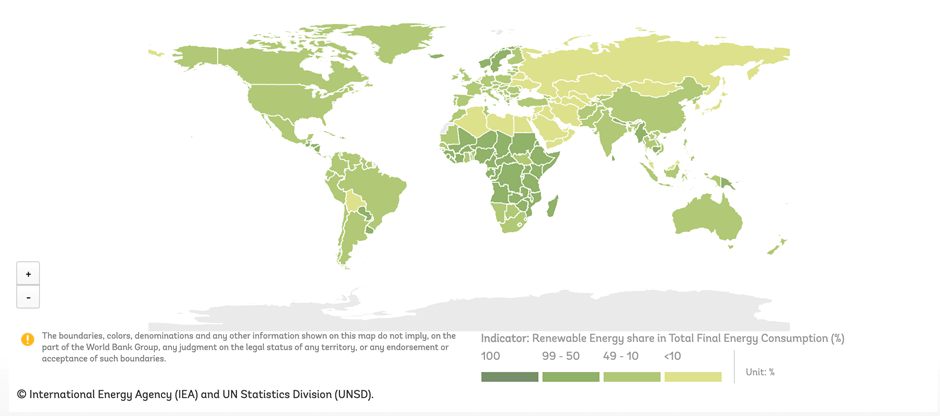
As per the UN Energy Progress Report 2021, the world is making progress towards Goal 7, Affordable and Clean Energy, of the UN Sustainable Development Goals. Data from 2018 (latest available) shows that globally the share of renewable energy is 17 per cent of the Total Energy Consumption.

The rapid transition to clean energy is inevitable, but it creates some pertinent questions regarding the Environmental and Social sustainability issues in the transition:

  1. Environmental sustainability:  Let’s not close our eyes for what’s happening. For instance, the mining of Neodymium, a rare earth element important for generator components in wind turbines Mining coal is harmful the environment, but mining neodymium is harmful as well, although considered relatively abundant in the Earth’s crust by some industry experts (opposing views are plenty!)
  2. Social sustainability Social aspect is globally diverse and complex. The planet’s resources need to be effectively and efficiently used to provide enough food and energy for everyone. As per the UN Energy Progress Report 2021, 13 per cent of the global population still lacks access to modern electricity and 3 billion people rely on wood, coal, charcoal or animal waste for cooking and heating. Is the transition to renewable energy solving energy poverty globally or is it limited to the fortunate who have had access to energy previously as well?
  3. ‘True’ sustainability:  As renewable energy component of the world’s Total Energy Consumption increase, it brings pressure on the natural resources including water, land use, forestry and marine resources as more resources are required for the renewable infrastructure.  Furthermore, indirect impact on biodiversity cannot be ignored. For instance, hydropower or open-cycle power plants involve significant thermal discharges, which could impact the biodiversity. It also raises questions as to whether submerging ecosystems under water by building hydropower dams is less destructive.

Sustainable renewables should be the focus rather than just ‘going green’ by utilising renewable sources, so that the new renewable investments are without the collateral damage and unintended negative consequences. As the pace of transition picks up, and we lay the foundations for a new and sustainable future, it is better to get it right during the transition, than to spend billions correcting the actions decades later.

Integrating ESG considerations into business strategy

Environmental, Social, and Governance (ESG) factors are increasingly important for companies across industries. ESG factors refer to a broad set of issues that relate to a company’s impact on the environment, society, and its governance structure. These factors are critical for creating long-term sustainable value for the company, its stakeholders, and society. This short article explores why companies should integrate ESG into their business strategy.

ESG factors are material to business performance

ESG factors can have a significant impact on a company’s financial performance and long-term sustainability. Companies that ignore ESG issues may face increased operational risks, reputational damage, and regulatory scrutiny. On the other hand, companies that manage ESG risks and opportunities well can create value for their stakeholders and enhance their reputation and brand value. For example, in the past 5 years, stock market data shows that companies that are leaders in ESG performance tend to have higher return on equity (ROE) and lower volatility in their stock prices.

ESG factors are important for stakeholder engagement

Stakeholder engagement is crucial for companies to build trust, maintain social license to operate, and attract and retain talent. ESG factors are increasingly important to stakeholders, including investors, customers, employees, and community members. Investors are increasingly using ESG factors to evaluate companies’ long-term sustainability and risk profile. Customers are becoming more aware of the social and environmental impact of their purchasing decisions. Employees are seeking to work for companies that align with their values and offer a positive work culture. Community members are demanding that companies take responsibility for their impact on the local environment and society. By integrating ESG into their business strategy, companies can demonstrate their commitment to responsible business practices and engage effectively with their stakeholders.

ESG factors are important for regulatory compliance

ESG factors are increasingly important for regulatory compliance across jurisdictions. Governments are enacting new laws and regulations to address environmental and social issues, such as climate change, human rights, and supply chain transparency. Companies that do not manage ESG risks may face legal and financial penalties and reputational damage. By integrating ESG into their business strategy, companies can ensure that they comply with existing and future regulations and reduce the risk of non-compliance.

ESG factors are important for innovation and competitiveness

ESG factors can drive innovation and competitiveness for companies. By considering ESG factors, companies can identify new business opportunities, develop innovative products and services, and differentiate themselves from their competitors. For example, companies that invest in renewable energy and sustainable products can create new revenue streams and enhance their market position. Companies that integrate diversity and inclusion into their business strategy can attract and retain a diverse talent pool and enhance their innovation capacity. By integrating ESG into their business strategy, companies can improve their long-term competitiveness and sustainability.

In conclusion, integrating ESG into business strategy is critical for companies to create long-term sustainable value for their stakeholders and society. ESG factors are material to business performance, stakeholder engagement, regulatory compliance, and innovation and competitiveness. Companies that integrate ESG into their business strategy can enhance their reputation, reduce risk, and create positive social and environmental impact. The evidence suggests that companies that lead in ESG performance tend to have higher financial performance and lower volatility in their stock prices. It is essential for companies to consider ESG factors in their decision-making processes and to report on their ESG performance transparently to their stakeholders.

Diversification strategies in Energy Transition

Diversification, in the context of the global energy transition, is the broadening of the core fossil fuel business of oil and gas companies into new low-carbon energy products and markets.  At present, there are limited low-carbon diversification options available to invest in, and the options are in industries that are themselves nascent or require a huge amount of R&D investment to improve profitability.  

Each option comes with some opportunities and some downside risks.  The challenge is to select the optimal option, given firm-level capabilities, economic, social, and political conditions, to effectively diversify away from a fast- disappearing value source, whilst managing the risks and opportunities.

Oil and gas companies, through this diversification, are seeking to develop a viable, sustainable, and profitable business model that meets the environmental, regulatory, and financial criteria set by climate change actions.  However, the companies have differing views of the impact of the climate change on their business models and product demand, as implied by their responses underpinned by their varying future scenarios and forecast models used for business planning.  

This results in a broad spectrum of diversification strategies. At one end of the spectrum are those companies who plan to stay firmly within the fossil fuel business, diversifying as little as possible, at the other end are those who aim to transform completely into pure players in a new industry.  Across the spectrum are companies aiming for varying degrees of diversification, in the short-term at least, from product diversification within existing fossil fuel markets to diversification into various low carbon and renewable technologies.

A quick skim through of the various diversification initiatives in the industry shows that there are three main strategies which are adopted.

  • The resources specialist strategy is betting on a future that promises significant demand for hydrocarbons for another 30 to 50 years. The hypothesis is that fossil fuels will continue to be a key component in the foreseeable future whilst energy transition evolves globally
  • The integrated energy player strategy is looking to retain the profitable core, while also capturing some of the large global opportunities now emerging in low-carbon markets, including renewable power, bioenergy, next-generation mobility, energy services and hydrogen
  • The low-carbon pure play strategy is betting heavily on building future-proof, low-carbon businesses while divesting themselves of legacy, high-carbon portfolios that could create management distractions and present investment propositions that are too mixed for both equity and debt investors

Energy Transition and its economic rationale has been long recognised by the corporate world. However, as stated above its not a one-size-fits all transition strategy adopted in the industry.  The choice depends a lot on the priorities outlined by senior decision makers of the company and the direction given by investors.  And these are expected to further evolve based on the early outcomes of the diverse strategies.

Energy Transition and the diversification of Oil and Gas business

To keep global warming to below 1.5 degrees C this century, the global energy system needs to be transformed from being largely based on fossil fuels to being largely based on renewable energy. This global energy transition shifts the production and consumption away from non-renewable fossil fuels towards the use of low carbon and renewable energy solutions. 

The International Renewable Energy Agency (IRENA) in its Global Renewables Outlook: Energy Transformation 2050 sets out an ambitious outlook to cut 70% of the world’s energy-related carbon dioxide (CO2) emissions by 2050. Over 90% of this reduction would be achieved through renewables and energy efficiency measures.  IRENA estimates that around 260GW of renewable energy capacity was added globally in 2020, beating previous record by almost 50%.

In the context of this fast-progressing energy transition, Oil and gas companies are faced with the existential challenge of how to diversify away from their current reliance on fossil fuels without losing the value and cash generating potential of their current business.  The expected decrease in demand for fossil fuels and concerns over damage from climate change is creating business risks for oil and gas companies and could result in a significant number of stranded assets and loss of value. In the long run, this could also lead to the transformation for some of the major oil and gas companies into completely new businesses.

Diversification, in the context of the global energy transition, is to broaden the core business of oil and gas companies into new low-carbon energy products and markets.  At present,

there are limited low-carbon diversification options available to invest in, and the options are in industries that are themselves nascent or require a huge amount of R&D investment to improve profitability.  Each option comes with some opportunities and some downside risks.  The challenge is to select the optimal option, given firm-level capabilities, economic, social, and political conditions, to effectively diversify away from a fast- disappearing value source, whilst managing the risks and opportunities.

The influence of ESG on Energy Transition

Environmental, Social, and Governance (ESG) criteria has become an integral part of investment decision making, especially when considering long-term growth and value implications.   At the same time, the development of strong ESG-related governance and reporting will set the industry for success as it embraces Energy Transition from fossil fuel-based sources to renewable and sustainable sources.

In a nutshell, the ESG criteria is a set of standards for an organisation’s operations that can be used to evaluate the organisation. Investors look at a broad range of behaviours under the three topics of Environmental, Social and Governance.  Based on the outcome of their evaluation of ESG criteria, investors place a premium or discount on potential investments.

The International Renewable Energy Agency (IRENA) in its Global Renewables Outlook: Energy Transformation 2050 sets out an ambitious outlook by calling to cut 70% of the world’s energy-related carbon dioxide (CO2) emissions by 2050. Over 90% of this reduction is expected to be achieved through renewables and energy efficiency measures.  IRENA estimated that around 260GW of renewable energy capacity was added globally in 2020, beating previous record by almost 50%.

The increased focus of ESG investing is providing a stimulus to Energy Transition.  There are three main influencing factors which is driving this.

Industry demand trends

There is varying opinion among experts on the so called ‘peak’ of oil and gas demand growth.  There are many corporates and industry experts who are of the opinion that peak oil and gas demand growth has already ended. However, there is widely consensus that the next decade will see massive growth in adoption of renewable energy sources such as wind and solar, and related technologies such as battery storage, to meet mainstream energy demand.

Return on Capital

There has been a long period of low prices in the oil and gas industry, sustained by an ever-increasing supply by main producers globally.  Hence it has not been a favourable investment climate recently for an industry which has historically seen a steady influx of investments in the past many decades, supporting capital intensive exploration and production projects.

Policy development  

Globally, policy makers and governments have accelerated measures to address climate change issues. In addition, laws regarding emissions standards have become more stringent.  Enhanced corporate reporting requirements has made it more transparent to see corporate initiatives on supporting sustainability.  Consequently, Global corporates, including oil and gas majors, are vying to be seen as the leaders on sustainability and all related topics.

In this backdrop of the global Energy Transition, ESG criteria provides a means for corporates to demonstrate their overall performance, including generating long term financial benefits for investors.  Proactive implementation of ESG principles and sustainable growth initiatives, helps to differentiate companies when seeking access to investors and their capital.  Large institutional investors are driving sustainability agendas by their direct intervention in the market and through Private Equity investors who control most of the capital flows globally. Hence companies who puts ESG at the forefront of their Energy Transition will be best placed to access the capital to support their transition initiatives.