ESG, which stands for Environmental, Social, and Governance (ESG), has become one of the key criteria in the evaluation process, when assessing potential investments. Under the three ESG areas, a set of standards, is used to evaluate the organisation’s operations. It is unlikely that an organisation scores the best in all ESG criteria. Investors take the outcome of the evaluation and incorporate it both qualitatively and quantitatively into their decision making.
Although ESG and related performance of organisations has been included in mainstream investment decisions for more than a decade, an area which is still evolving is how ESG should be quantified and included in the business valuations. To understand the significance of including ESG impact in the valuation, let’s look at the two main traditional valuation methods – Discounted Cash Flow (DCF) method and Multiple of Earnings method.
Discounted Cash Flow method
Under the DCF method, the Free Cash Flows of a company are discounted with the expected cost of capital to arrive at the valuation. In simple terms, Free cash flow (FCF) is the money a company has left over after paying its operating expenses and capital expenditures and Cost of Capital represents the risks related to the cash flows.
ESG impact can be included in either of the two main components, namely Free Cash Flow and the Cost of Capital, to influence the business valuation. By doing this, the positive or negative impacts of ESG criteria evaluation, on the future cash flows of the company, and hence its valuation can be considered. For instance, in the case of a company with higher ESG risks, cash flows can be adjusted down, or cost of capital can be increased, and vice versa. Often in making such adjustments, one need to consider the materiality of the impact of the relevant ESG criteria. The materiality would be specific to the company and its industry. To reduce the subjectivity involved in determining the materiality, analysis of multiple scenarios and techniques such as weighted average analysis should be used.
Multiple of Earnings method
Under the multiple of earnings method, the value of a company is determined by applying a multiple to the company’s earnings. It is a relative valuation method and seeks to evaluate similar companies using the same set of standardised financial metrics. A commonly used multiple is Price-to-Earnings (P/E) multiple.
ESG impact can be included in the multiple used for the valuation. The impact of ESG criteria results in a higher or lower multiple, relative to those achieved in comparable transactions. For instance, a Private Equity buyer who considers the impact of ESG criteria, and the resulting risks and/or opportunities during the due diligence phase can optimise the price paid. Similarly, a corporate seller, doing a divestment of a non-core asset, can effectively use the positive impact of ESG criteria on the company’s operations, in influencing a higher valuation multiple for the transaction.
As mentioned previously, multiples are influenced by the prices achieved for transactions involving comparable transactions in the market. There is not yet full transparency regarding the influence of ESG criteria in both public and private transactions. Hence there are limitations in identifying comparable transactions which included ESG criteria or the level of inclusion of ESG criteria. In addition, there is the risk of arbitrary adjustments to the multiple. As more data becomes available, inclusion of ESG criteria in multiples can be further refined.
The inclusion of ESG criteria in business valuation has gained more prominence recently. There are several ways ESG is incorporated in the valuations, and it continues to evolve. As more instances of ESG application in valuation becomes available, across various industries and geographies, best practice models are expected to emerge.
The challenge is that companies commonly take into account climate-change threats to their assets and operations. But they are less proactive about considering risks that climate-change policies pose to their strategy and returns.
One of the possible solutions is predicting that those policies will extract a growing price for firms carbon emission. More and more companies are setting a monetary value on their own emissions to help them evaluate investments, manage risk, and develop strategy.
Companies must forecast future carbon prices in the jurisdictions where they do business and then set an internal carbon price (ICP) that reflects their emissions and the likely trajectory of carbon prices set by governments. A carefully calculated ICP can position a firm for future regulation and help It gain long-term advantage.
By setting an internal carbon price (ICP), companies can prepare for uncertain external pricing in the future, and investors can get a clearer picture of a firm’s ability to compete in a low-carbon world.
Platform based digital energy ecosystems have evolved to address the strategic transition challenges facing the energy sector.
Platform based Digital Energy Ecosystem
Digital technologies, such as AI and Blockchain, are shaping the response to transition challenges by enabling the creation of platform-based energy ecosystems. Digitalisation is a key enabler of the change from traditional centralised model to a more decentralised model along with the advancement of renewable energy technologies (RETs). Digitalisation aims to connect every segment of the energy ecosystem such as households, prosumers, distribution, transmission, generation and retail, and is frequently stated as likely to lead to a transformation of the energy system. Digitalisation creates a large amount of data in real time (e.g. instantaneous electricity supply and demand at every node of the electricity network) and provides a potential to develop an information based digital energy system.
Platform ecosystems are an omnipresent phenomenon that challenges incumbents by changing the way we consume and provide digital products and services . Platform ecosystem presents an opportunity along the power-industry value chain, from generation to customer relationship management. The emergent energy platforms offer decentralised, digitally enabled exchanges of energy from distributed sources . They can record flows of energy to administer connections of exchange between household users, develop algorithms to steer the flow of energy from and to household batteries, and enable crowdsourced investments into (small-scale) renewable energy production
Ecosystems
The benefit of renewable energy technologies ( RET) would be limited if they are not integrated into a larger platform-based ecosystem. Digitalisation helps to encompass stakeholders beyond a single participant itself to unlock full potential. With every year, as power generation becomes more distributed, the expanding range of digital tools become more central to facilitating an ecosystem.
There are numerous well-known examples of platform-based ecosystems such as those engaged in social media, e-commerce, transportation, banking and even mining. These include tech leaders Google, Amazon, Facebook, and Apple, as well as longer-established companies, such as Maersk and Cisco (Gawer,2014). The concept of platform-based ecosystem, however, is a novel idea to the energy sector and is soon gaining popularity.
With the influx of diverse complementors and users, a platform based ecosystem provides the interoperability that eases the participation of the diverse stakeholders. Every component of the value chain needs to be integrated and orchestrated in a seamless manner. The diverse stakeholders include distribution system operators (DSOs) for both renewable and traditional energy sources, e-mobility providers, power providers, prosumers, energy service companies and consumers. Over time, as more stakeholders, complementors and users, participate the value of the ecosystem increases further.
Platform model
Platforms are particularly well built to connect distributed resources, either when ownership of assets is decentralized (such as Airbnb) or when spatial dispersal is key to the platform’s service (such as ZipCar). Many digital platforms therefore do not provide or own physical infrastructures or assets, but act as a service on top of these. They facilitate decentralised, digitally enabled exchanges of distributed resources.
Energy platforms would share these characteristics. They would make use of a digital environment to connect users and their resources. The providers of energy platforms would also tend not to own generation capacity or produce energy themselves but facilitate transactions between energy prosumers and consumers that would otherwise struggle to find each other.
There are some differences expected in the design of the energy platforms such as how the platform technology relates to the grid and by what they allow consumers to do (Boekelo & Kloppenburg, 2019). The first difference is whether they enable exchanges by using smart meters to record energy flows in and out of customers’ households, or whether, with the help of algorithms, they intervene by steering those energy flows themselves. A second difference is whether the platforms enable connection to existing resources (generally the small-scale prosumers assets, such as PV panels) or whether they facilitate the construction of and access to new resources (which can be more substantial in scale). Thirdly, on the consumer-facing side, the primary point of differentiation is whether platforms enable individual choice or whether they entail submitting to the power of the crowd, at which point the platform (algorithmically) assumes certain responsibility for energy traffic.
Orchestration of the platform
Orchestrators are those who play the role of integrating the activities of the different stakeholders in the platform to bring it to a cohesive whole (Gawer and Cusumano, 2008). They play a pivotal role and significantly stand to gain as platform-based ecosystem increase market share and eat into the profits of traditional companies. However, orchestration comes with challenges of scaling the ecosystem, expanding it beyond its initial use case, or simply with monetization and value extraction. The orchestrators have to embrace the digital business model built upon the platform, while ensuring that ecosystem complementors and users benefit, thereby enhancing the scope and attractiveness of the platform .
In the energy sector, many small start-up companies have taken on the orchestrator role and is gaining market share especially in the expanding renewable market. A few utility companies and oil majors have started investing into these start-up companies, as ecosystem partners, in order to take advantage of the innovation and the services that they offer. This especially is useful in an environment where the energy system is undergoing a decentralisation requiring high level of coordination and collaboration for the efficient flow of data and energy. This is also a great opportunity for utility companies and others entering into the space to get closer to the customers and to become valuable ecosystem partners as they hold huge quantities of data.
There are various key factors which would determine the orchestration success of the platform.
Leveraging network effect
Growing the platform by bringing in a number of ecosystem partners, complementors and users is key for making the platform effective and successful. Network effects can help to increase the business as players can broaden the reach by moving into adjacent areas. Leveraging network effects is the most potent method for amplifying the range and influence of an existing ecosystem quickly. As new members are attracted to the ecosystem by growing user base, new complementors producing more and better content and by a larger variety of product offerings seek to reach these members. This creates an exponential growth and creates an entry barrier to new incumbents by those already in place. In the case of energy sector, ecosystems are a novel concept, giving the opportunity for aggressive and ambitious players to grab the market share. But this could also lead to the issue of monopolization of the market, which will be acted upon by regulators.
Ensuring quality and service
As the ecosystem evolves, it is important to maintain the platform at the highest quality by providing best-in-class functionality and services. Orchestrators have to decide between an open and a closed structure . As quality of service is paramount in an energy ecosystem, a closed structure provides the right control ensuring the quality. The orchestrators can control and vet the partners and complementors who provide services in the platform. The ecosystem can be designed to create tailored experiences for the partners, complementors and users, from advanced analytics on energy production and consumption patterns. Given the large amounts of data capable of being generated by the electricity system in real time (e.g. instantaneous electricity supply and demand at every node of the electricity network), it is a promising area for AI.
Managing Relationships
Orchestrators must be proactive about managing relationships between customers and complementors to ensure that the quality of service is held at highest standards. The phenomenon of multihoming, which entails complementors participating on several platforms simultaneously to provide the best profit potential and largest customer base, is one of the main challenges faced by orchestrators. As a result, complementors can jump between platforms that offer them the best service. In the same way, customers could also jump between platforms depending on their preferences and choices on the complementors participating in the ecosystem.
Increasing stickiness
One of the ways to increase the stickiness to the platform is to provide incentives to the ecosystem partners and complementors to offer highly competitive applications on the platform through modularity. Modularity describes the degree to which a system can be broken into modules and recombined in various ways . This modularity feature helps to create product variety (and would result in higher quality offerings, which in turn, would make it very attractive to consumers. Another way is to offer cross selling and upselling opportunities, depending on the needs of the users. Orchestrators could use the data available on the platform to study the customer and complementor behaviours. This could further be used to recommend services and products that could benefit the customers and complementors.
Environmental, social, and governance (ESG) criteria has become an essential part of the investment process. Depending on the availability of data, ESG can be integrated into the investment process for making decisions. It can also highlight companies that may carry a greater financial risk due to their environmental or social or governance practices.
In a nutshell, the ESG criteria is a set of standards for an organisation’s operations that can be used to evaluate the organisation. Investors look at a broad range of behaviours under the three topics of ESG:
Environmental: It considers how an organisation performs its responsibility towards environment and its sustainability. The criteria may include its use of energy, treatment and disposal of waste, handling of pollution, conservation of environment, preservation of natural resources, management of environmental risks and compliance with various environmental protection laws
Social: It considers how an organisation manages its conduct with customers, suppliers, employees, and the communities. The criteria may include its values and policies which drive business relationships with customers and suppliers, trade practices, working conditions of employees, health and safety records, consideration of community interests in projects, and so on.
Governance: It considers how an organisation deals with leadership, executive pay, internal controls, and shareholder rights. The criteria may include transparency of accounting methods, appointment of board members, conflicts of interests, anti-bribery and corruption policies, political relationships, and protecting shareholder interests.
It is unlikely that an organisation scores the best in all criteria. It is still an evolving topic, and most companies are on a journey to transform their businesses, in support of ESG considerations. Depending on industry sector and geographies in which they operate, some companies would have progressed well in some of the criteria whilst still working on the others. In the meantime, investors, of course, need to decide what’s most important to them in making their investment decisions.
ESG is the latest acronym which you see everywhere in the corporate world. Boardrooms, senior management, consultants, press, webinars or blogs, everyone talks about the importance of ESG. Every policy, strategy, or investment is now evaluated with an ESG lens. You just can’t miss it! So, what is it?
ESG stands for Environmental, Social, and Governance (ESG), a term which first appeared in the August 2005 Conference Report ‘Investing for Long-Term Value’. The conference in Zurich, Switzerland was part of the Who Cares Wins initiative by the United Nations Global Compact, voluntary corporate citizenship initiative launched by the United Nations Secretary-General Kofi Annan. The objective of the conference was to Integrate environmental, social and governance value drivers in asset management and financial research.
Subsequently in April 2006, the United Nation’s Principles for Responsible Investment was launched by the UN Secretary-General. The principles were developed during a nearly year-long process, coordinated by the United Nations with participation by a group of the world’s largest institutional investors, who became the initial signatories to the principles. It also resulted in the formation of The UN Principles for Responsible Investment (PRI), an international organization that works to promote the incorporation of environmental, social, and corporate governance factors into investment decision-making.
There are six Principles for Responsible Investment, which have been adopted by the signatories, to develop a more sustainable global financial system. These six Principles for Responsible Investment offer a menu of possible actions for incorporating ESG issues into investment practice. They are as follows:
Principle 1: We will incorporate ESG issues into investment analysis and decision-making processes.
Principle 2: We will be active owners and incorporate ESG issues into our ownership policies and practices.
Principle 3: We will seek appropriate disclosure on ESG issues by the entities in which we invest.
Principle 4: We will promote acceptance and implementation of the Principles within the investment industry.
Principle 5: We will work together to enhance our effectiveness in implementing the Principles.
Principle 6: We will each report on our activities and progress towards implementing the Principles.
There are more than 2500 participating financial institutions. These institutions participate as signatories and file regular reports on their progress towards implementing the six principles in making their investments.
There are many strategic transition challenges facing the Power Generation and Distribution Market.
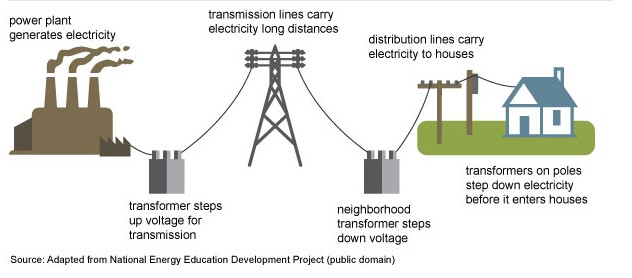
Traditionally, electricity has been generated, through a centralised model, in large power plants, transferred through transmission and distribution networks and delivered to end users in the residential, commercial, industrial and transport sectors. Traditional grids are based on a technical paradigm where the low- and medium-voltage parts – the distribution grids – traditionally pass on power generated elsewhere in one direction to consumers, who are passive recipients.
Centralised Generation System
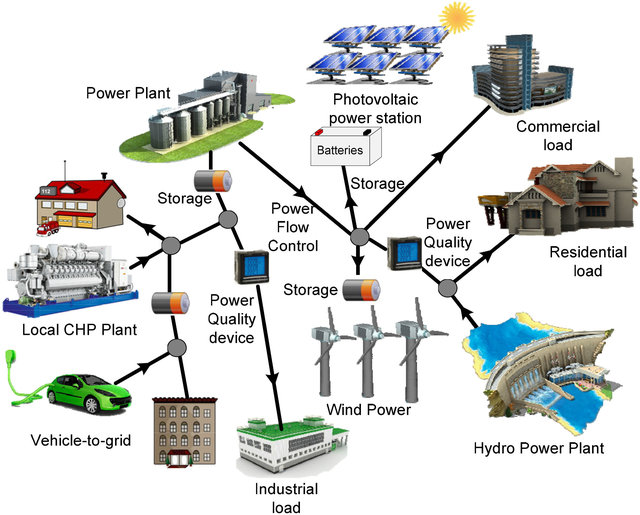
As the generation shifts from conventional power to renewable sources, it has to move away from the centralised model to a decentralised model since the renewable sources of power generation are located in different places. The new power markets are created through distributed energy systems which build on complex interconnected hardware systems and require novel solutions that support the exchange of energy and related data.
In a decentralised energy system, the individual producers and consumers of energy needs to be integrated to manage the production and consumption of energy. This integration would provide not only scalability, but also, match the demand and supply, to meet increasing demands of energy. At the same time, any credible alternative to traditional model needs to be cost effective and resilient to facilitate mass adoption.
The challenge lies in the coordination of the activities of the different players in the platform into a cohesive whole. In many cases, this coordination act makes the difference between coherence and failure. There are many critical areas of transition challenges which are discussed below.
Optimal energy management
The energy grid is a critical infrastructure of society ensuring uninterrupted power supply in an efficient manner. Energy management continues to play a key role in a decentralised model of power generation, albeit moving from the grid to micro-grids. Every segment of the value chain – households, prosumers, distribution, transmission, generation and retail – needs to be connected to enable the formation of an energy-efficient and environmentally friendly energy market. A fully-functioning and intelligent energy management system is required to keep the system balanced across production, consumption, and storage. It is also required to enable innovative ways of power distribution, grid monitoring and communication as it enhances the transfer of energy and data bidirectionally.
Changing industry dynamics
Porter, 1979 stated the industry forces – suppliers, customers, competition, substitution and barriers to market entry – are key to explaining industrial dynamics. The competitive forces are driven by the power of suppliers and customers in the value chain. The entry of new players or products or services brings about a change in the industry dynamics. Digitalisation has initiated changes to the business models and has an impact on the industry dynamics. Freeman’s stakeholder view identifies actors such as environmentalists and consumers advocated as actors impacting firms and industries.
Entry of prosumer model of energy consumption and generation can influence a change in industry dynamics. Prosumer is consumer that acts as a producer. A prosumer can be an individual person as household level customer, a larger building (e.g. apartment building or shopping centre), business entity like organisation or a firm, or other kind of community. Prosumer may assume different level of activities including personalisation that can vary from producing energy for own use to sharing excess energy through the grid and becoming an active participant in the energy industry.
Decentralised energy generation
Deploying local solar plants, small wind farms, battery storage and combined heat-and- power is replacing the centralised model with smaller, nimbler, decentralised sources of energy. Digitalisation along with the reduction in the prices for renewable technologies have improved the economics of the small scale decentralised power generation. However, the uptake of decentralised energy faces a number of challenges such as new disciplines on suppliers and customers, complexity of technology with respect to grid connection and reverse-metering, contracting and managing etc.
Policy and regulations
In many markets, policy has been lagging behind the development in technologies and it has been an absolute barrier to the growth of decentralised model. Traditionally, policies were developed by energy experts talking to energy experts, but now since the market participants include industries, prosumers, businesses; their participation is vital to achieve the growth and the security of energy supply. Policy makers and energy industry need to start bringing their former customers, and new competitors, into their policy conversations.









 STRATEGIC VALUE