Could the transition to renewable energy be truly sustainable? Are Environmental and Social issues adequately considered?

Sustainable energy sources are commonly understood as energy sources that meets the needs of the present without compromising the ability of future generations to meet their own needs.  In the past, we have transitioned our major energy sources from Coal to Oil and Gas, which was considered more environment friendly at that time.  Now, we are urgently transitioning from Oil and Gas to more greener and sustainable energy sources.

Renewable energy sources are often termed as sustainable energy sources. However, are they truly sustainable?  Is the transition sustainable this time around or are we just solving a current problem and creating another one for the future? 

Renewable energy is energy from sources that are continuously replenished naturally.  Among others, common forms of renewable energy include solar power, wind power, hydroelectric power, tidal power, and biomass energy.

As per the UN Energy Progress Report 2021, the world is making progress towards Goal 7, Affordable and Clean Energy, of the UN Sustainable Development Goals. Data from 2018 (latest available) shows that globally the share of renewable energy is 17 per cent of the Total Energy Consumption.
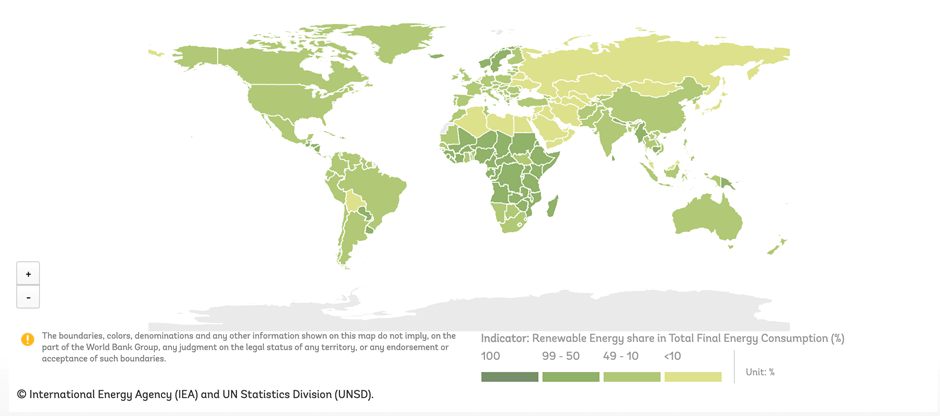
The rapid transition to clean energy is inevitable, but it creates some pertinent questions regarding the Environmental and Social sustainability issues in the transition:

  1. Environmental sustainability:  Let’s not close our eyes for what’s happening. For instance, the mining of Neodymium, a rare earth element important for generator components in wind turbines Mining coal is harmful the environment, but mining neodymium is harmful as well, although considered relatively abundant in the Earth’s crust by some industry experts (opposing views are plenty!)
  2. Social sustainability Social aspect is globally diverse and complex. The planet’s resources need to be effectively and efficiently used to provide enough food and energy for everyone. As per the UN Energy Progress Report 2021, 13 per cent of the global population still lacks access to modern electricity and 3 billion people rely on wood, coal, charcoal or animal waste for cooking and heating. Is the transition to renewable energy solving energy poverty globally or is it limited to the fortunate who have had access to energy previously as well?
  3. ‘True’ sustainability:  As renewable energy component of the world’s Total Energy Consumption increase, it brings pressure on the natural resources including water, land use, forestry and marine resources as more resources are required for the renewable infrastructure.  Furthermore, indirect impact on biodiversity cannot be ignored. For instance, hydropower or open-cycle power plants involve significant thermal discharges, which could impact the biodiversity. It also raises questions as to whether submerging ecosystems under water by building hydropower dams is less destructive.

Sustainable renewables should be the focus rather than just ‘going green’ by utilising renewable sources, so that the new renewable investments are without the collateral damage and unintended negative consequences. As the pace of transition picks up, and we lay the foundations for a new and sustainable future, it is better to get it right during the transition, than to spend billions correcting the actions decades later.

Diversification strategies in Energy Transition

Diversification, in the context of the global energy transition, is the broadening of the core fossil fuel business of oil and gas companies into new low-carbon energy products and markets.  At present, there are limited low-carbon diversification options available to invest in, and the options are in industries that are themselves nascent or require a huge amount of R&D investment to improve profitability.  

Each option comes with some opportunities and some downside risks.  The challenge is to select the optimal option, given firm-level capabilities, economic, social, and political conditions, to effectively diversify away from a fast- disappearing value source, whilst managing the risks and opportunities.

Oil and gas companies, through this diversification, are seeking to develop a viable, sustainable, and profitable business model that meets the environmental, regulatory, and financial criteria set by climate change actions.  However, the companies have differing views of the impact of the climate change on their business models and product demand, as implied by their responses underpinned by their varying future scenarios and forecast models used for business planning.  

This results in a broad spectrum of diversification strategies. At one end of the spectrum are those companies who plan to stay firmly within the fossil fuel business, diversifying as little as possible, at the other end are those who aim to transform completely into pure players in a new industry.  Across the spectrum are companies aiming for varying degrees of diversification, in the short-term at least, from product diversification within existing fossil fuel markets to diversification into various low carbon and renewable technologies.

A quick skim through of the various diversification initiatives in the industry shows that there are three main strategies which are adopted.

  • The resources specialist strategy is betting on a future that promises significant demand for hydrocarbons for another 30 to 50 years. The hypothesis is that fossil fuels will continue to be a key component in the foreseeable future whilst energy transition evolves globally
  • The integrated energy player strategy is looking to retain the profitable core, while also capturing some of the large global opportunities now emerging in low-carbon markets, including renewable power, bioenergy, next-generation mobility, energy services and hydrogen
  • The low-carbon pure play strategy is betting heavily on building future-proof, low-carbon businesses while divesting themselves of legacy, high-carbon portfolios that could create management distractions and present investment propositions that are too mixed for both equity and debt investors

Energy Transition and its economic rationale has been long recognised by the corporate world. However, as stated above its not a one-size-fits all transition strategy adopted in the industry.  The choice depends a lot on the priorities outlined by senior decision makers of the company and the direction given by investors.  And these are expected to further evolve based on the early outcomes of the diverse strategies.

Energy Transition and the diversification of Oil and Gas business

To keep global warming to below 1.5 degrees C this century, the global energy system needs to be transformed from being largely based on fossil fuels to being largely based on renewable energy. This global energy transition shifts the production and consumption away from non-renewable fossil fuels towards the use of low carbon and renewable energy solutions. 

The International Renewable Energy Agency (IRENA) in its Global Renewables Outlook: Energy Transformation 2050 sets out an ambitious outlook to cut 70% of the world’s energy-related carbon dioxide (CO2) emissions by 2050. Over 90% of this reduction would be achieved through renewables and energy efficiency measures.  IRENA estimates that around 260GW of renewable energy capacity was added globally in 2020, beating previous record by almost 50%.

In the context of this fast-progressing energy transition, Oil and gas companies are faced with the existential challenge of how to diversify away from their current reliance on fossil fuels without losing the value and cash generating potential of their current business.  The expected decrease in demand for fossil fuels and concerns over damage from climate change is creating business risks for oil and gas companies and could result in a significant number of stranded assets and loss of value. In the long run, this could also lead to the transformation for some of the major oil and gas companies into completely new businesses.

Diversification, in the context of the global energy transition, is to broaden the core business of oil and gas companies into new low-carbon energy products and markets.  At present,

there are limited low-carbon diversification options available to invest in, and the options are in industries that are themselves nascent or require a huge amount of R&D investment to improve profitability.  Each option comes with some opportunities and some downside risks.  The challenge is to select the optimal option, given firm-level capabilities, economic, social, and political conditions, to effectively diversify away from a fast- disappearing value source, whilst managing the risks and opportunities.

The influence of ESG on Energy Transition

Environmental, Social, and Governance (ESG) criteria has become an integral part of investment decision making, especially when considering long-term growth and value implications.   At the same time, the development of strong ESG-related governance and reporting will set the industry for success as it embraces Energy Transition from fossil fuel-based sources to renewable and sustainable sources.

In a nutshell, the ESG criteria is a set of standards for an organisation’s operations that can be used to evaluate the organisation. Investors look at a broad range of behaviours under the three topics of Environmental, Social and Governance.  Based on the outcome of their evaluation of ESG criteria, investors place a premium or discount on potential investments.

The International Renewable Energy Agency (IRENA) in its Global Renewables Outlook: Energy Transformation 2050 sets out an ambitious outlook by calling to cut 70% of the world’s energy-related carbon dioxide (CO2) emissions by 2050. Over 90% of this reduction is expected to be achieved through renewables and energy efficiency measures.  IRENA estimated that around 260GW of renewable energy capacity was added globally in 2020, beating previous record by almost 50%.

The increased focus of ESG investing is providing a stimulus to Energy Transition.  There are three main influencing factors which is driving this.

Industry demand trends

There is varying opinion among experts on the so called ‘peak’ of oil and gas demand growth.  There are many corporates and industry experts who are of the opinion that peak oil and gas demand growth has already ended. However, there is widely consensus that the next decade will see massive growth in adoption of renewable energy sources such as wind and solar, and related technologies such as battery storage, to meet mainstream energy demand.

Return on Capital

There has been a long period of low prices in the oil and gas industry, sustained by an ever-increasing supply by main producers globally.  Hence it has not been a favourable investment climate recently for an industry which has historically seen a steady influx of investments in the past many decades, supporting capital intensive exploration and production projects.

Policy development  

Globally, policy makers and governments have accelerated measures to address climate change issues. In addition, laws regarding emissions standards have become more stringent.  Enhanced corporate reporting requirements has made it more transparent to see corporate initiatives on supporting sustainability.  Consequently, Global corporates, including oil and gas majors, are vying to be seen as the leaders on sustainability and all related topics.

In this backdrop of the global Energy Transition, ESG criteria provides a means for corporates to demonstrate their overall performance, including generating long term financial benefits for investors.  Proactive implementation of ESG principles and sustainable growth initiatives, helps to differentiate companies when seeking access to investors and their capital.  Large institutional investors are driving sustainability agendas by their direct intervention in the market and through Private Equity investors who control most of the capital flows globally. Hence companies who puts ESG at the forefront of their Energy Transition will be best placed to access the capital to support their transition initiatives.